
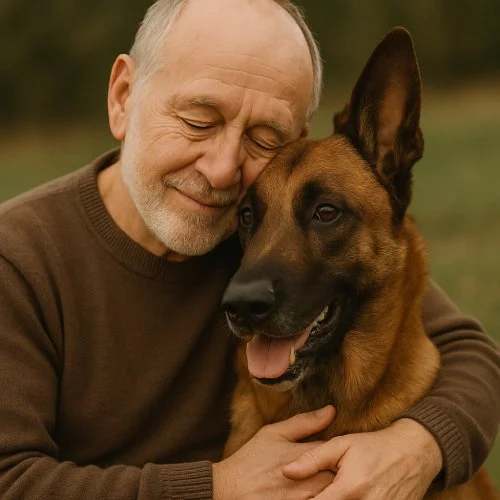
Loyalty: The Forgotten Trait of the Dog, and the Injustice We Do to It
By Max Taylor
In the past, people spoke of a dog's loyalty as a core trait, almost taken for granted. It was regarded as a pillar in the bond between dog and human – a deep, respected quality present in both behavior and character. In the modern era, however, that concept is fading from view, and people rarely talk about it anymore. The focus has shifted to techniques, approaches, and behavioral analyses – and loyalty? It seems no longer relevant. That is a major oversight, because that is precisely where the heart of the dog lies.
Here is where the problem begins: in an era where we are used to interpreting behavior through terms like "positive," "negative," "rewarding," or "frustrating," we sometimes miss the simple, deep thing a dog expresses – a love that holds commitment, protection, and guardianship within it. That is loyalty.
What Is True Canine Loyalty?
A dog's loyalty is not just affection or excitement when the owner comes home. It is a deep emotional commitment to a specific person or family, expressed in many ways:
The dog allows the owner to do anything with it – but will not allow any stranger to do so: Only someone the dog knows and trusts can pull on its collar, check an ear, or put on a harness. A stranger who tries will meet resistance – sometimes even aggression. This is not a behavior problem; it is loyalty.
The dog does not "switch sides" for a treat: No matter how hard someone else tries, a loyal dog will not replace its person. It knows who belongs to it and stays there. Even when the temptation is strong, and even when force is used – the dog does not accept the stranger easily.
The dog protects the owner even at the cost of personal risk: When it senses a threat, it steps between the danger and its owner. It does not do this for a treat – it simply cannot bear to see its person hurt. This is a combination of a developed protective drive and deep loyalty.
The dog is aloof toward strangers – not out of "evil," but out of loyalty: In many cases, a dog that does not accept touch from strangers, warns or barks when someone approaches, or tries to push away someone acting "overly familiar" is seen as problematic. It is not problematic. It is expressing loyalty. And this is a trait to understand and manage, not "fix."
Wariness of Strangers That Does Not Come from Fear or Anxiety Is Usually Loyalty
It is important to clarify a key point: we are not talking here about anxious or fearful dogs, or those whose behavior toward strangers stems from trauma or lack of proper exposure. In those cases, you should seek professional behavioral help, identify the source of the anxiety, and help the dog build confidence.
Still, there are plenty of cases where a dog is wary of strangers and even reacts aggressively toward them not out of fear, anxiety, or extreme aggression, but out of deep loyalty to the owner, family members, and the animals it lives with. That is not weakness – it is strength. And that is not a problem to "fix" – it is a natural, healthy behavior that you need to know how to manage and navigate properly.
Even in these situations, order and control matter: a loyal dog needs clear leadership, boundaries, and consistent management. Yet you must not break it, force it to love someone it does not want to, use manipulation on it, or try to "turn it into everyone's friend."
We do not go against nature – we work with it.
And What Do We Do in Practice? Sometimes the Exact Opposite
Instead of understanding the dog, people rush to slap a label on it:
They call it "untrained" or "aggressive."
They send it to intensive "behavioral work."
They shower it with treats in an attempt to "break" the resistance.
And in extreme cases – they give it psychiatric medications to "calm the sensitivity."
This is a sad state of affairs. That is not a solution, but harm to the essence of the dog.
So What Should We Do Instead?
Establish clear control: A loyal dog needs a clear, steady, calm leader – not loud and not permissive.
Avoid forced exposure: Not every dog has to "connect with everyone," and there is no real justification for that.
Accept the dog as it is: Not as we wish it would be.
Call the trait by its name: Stop labeling it a problem and recognize it as loyalty.
A Final Message – Especially for the Younger Generation of Trainers
Working with dogs does not come down to techniques, methods, or approaches alone. Above all, it means listening to the dog's character and the meaning of its behavior. Not everything uncomfortable to us is a "problem to fix" – sometimes it is a natural, healthy behavior that we must respect, manage, and respond to accordingly.
